 Image 1 of 5
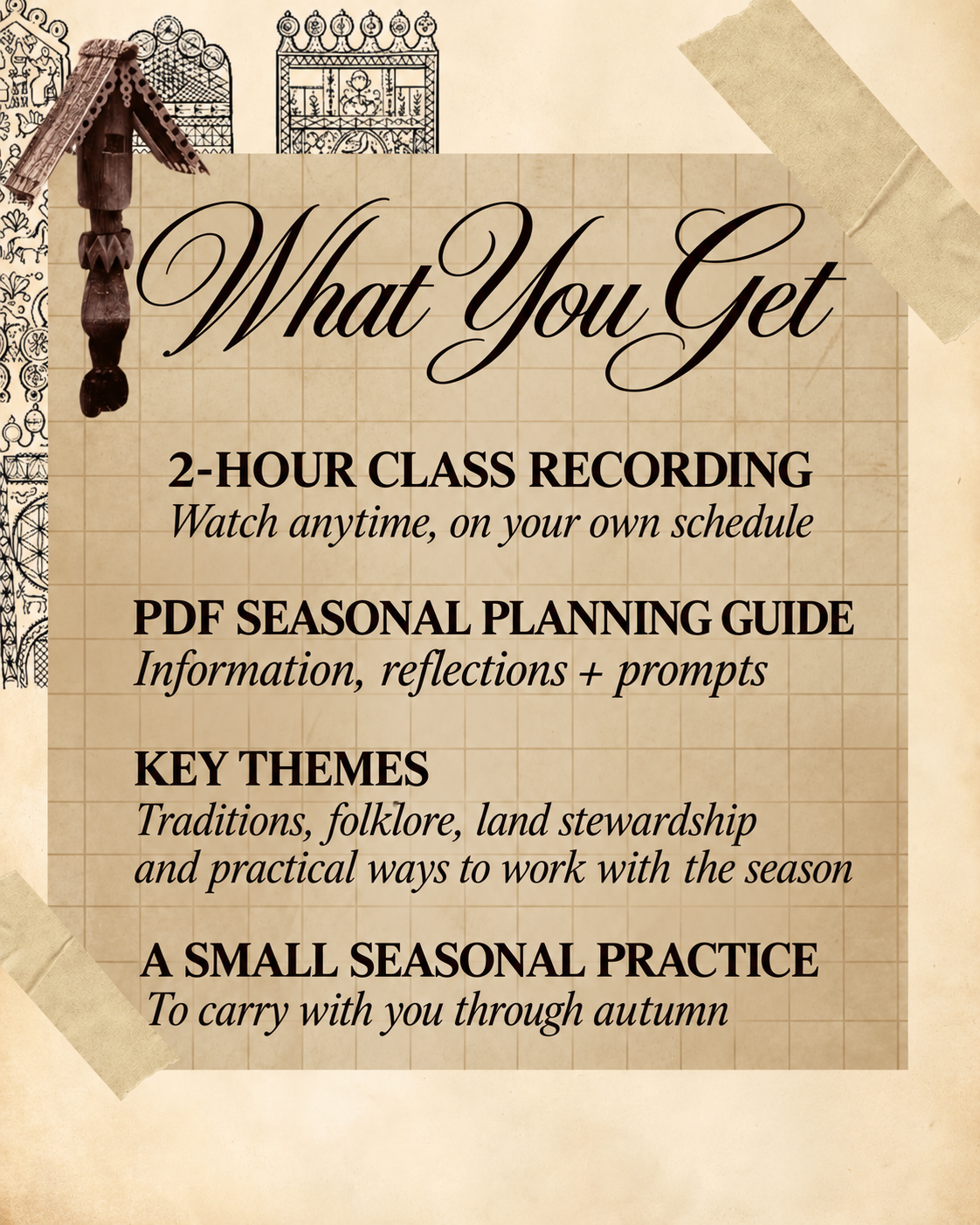 Image 2 of 5
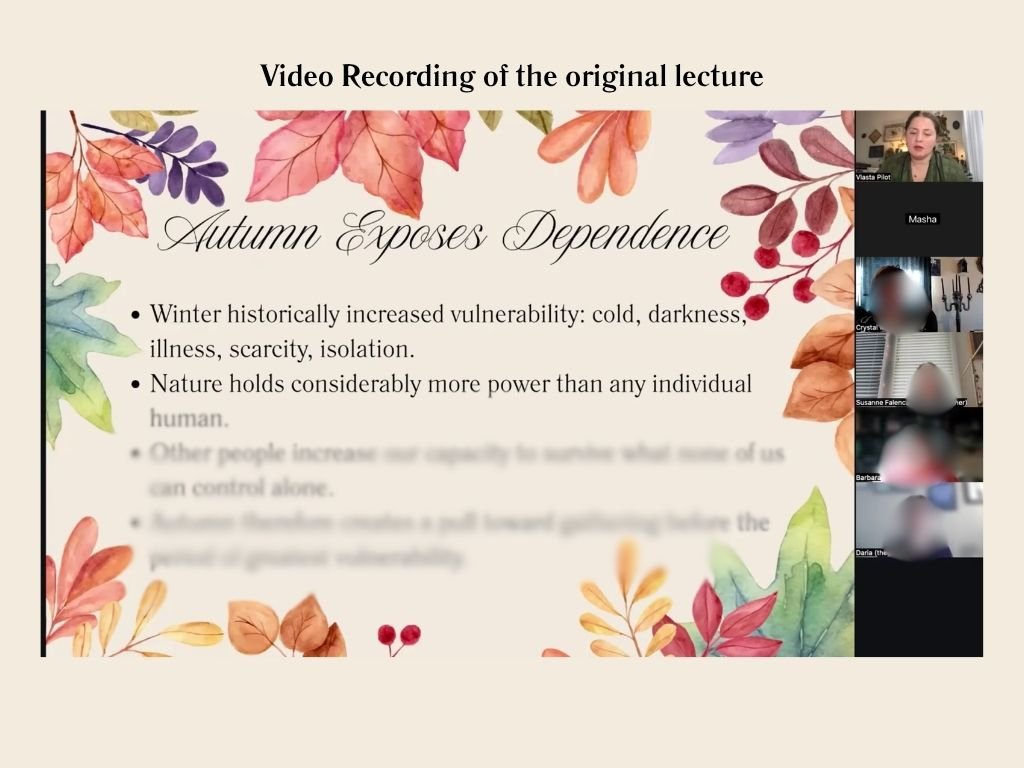 Image 3 of 5
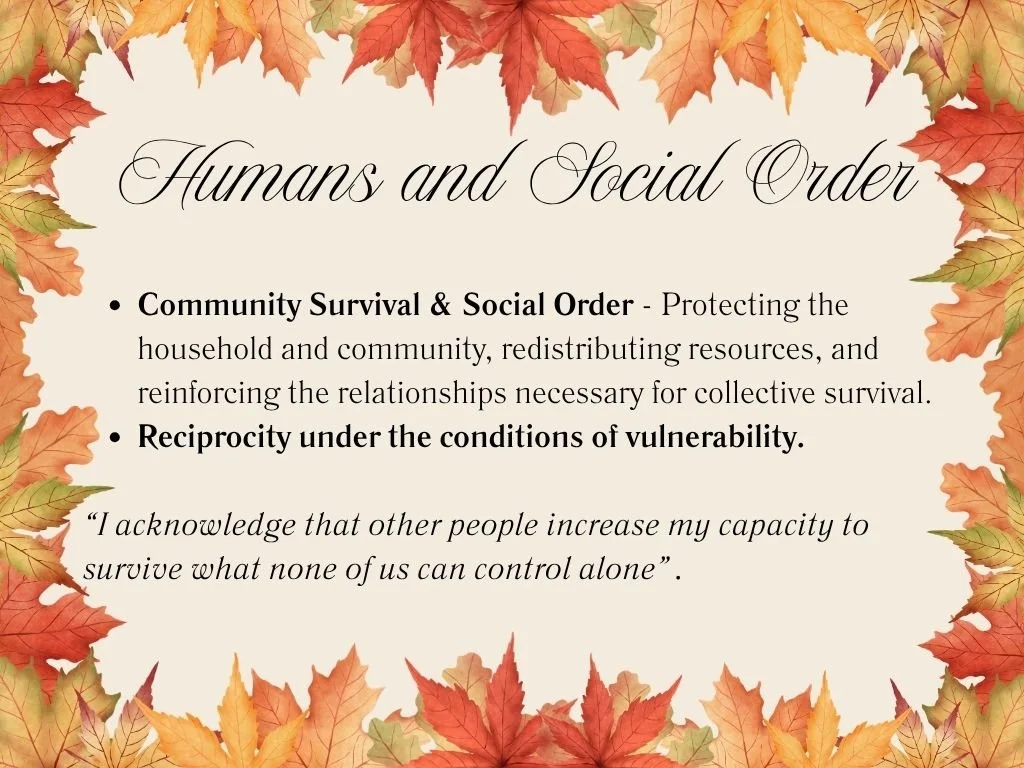 Image 4 of 5
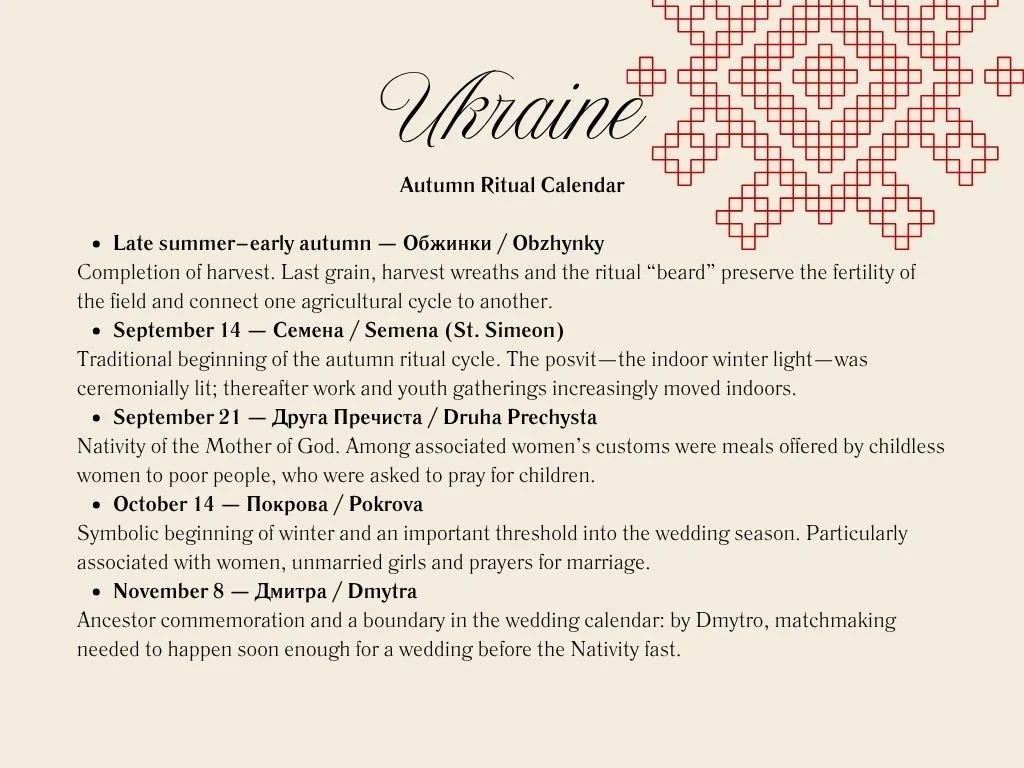 Image 5 of 5
Recording of 2-hour class + companion PDF
Modern life can make the passing of time feel strangely disorienting. One season rolls into another, holidays arrive before we have had time to think about what they mean, and the end of the year can quickly become a rush of obligations, consumption, and trying to fit everything in.
The Calendar Call: Autumn Threshold looks at Eastern European Slavic and Finno-Ugric autumn traditions to ask a different question: what was autumn actually preparing people for?
Historically, winter meant greater vulnerability: cold, darkness, illness, scarcity, isolation. Autumn was therefore not simply a celebration of harvest or an invitation to “slow down.” It was a period of taking stock—of what had been gathered, what needed to be preserved, what had to be returned, and who you would depend on during the season ahead.
Through harvest rituals, offerings, ancestor traditions, communal labor, feasting, courtship, marriage customs and the movement of work from field to household, this class follows two interconnected ideas: reciprocity and belonging. What do we owe to the land, places, people, knowledge and systems that sustain us? And what happens to our relationships with one another when the world outside becomes less abundant and more uncertain?
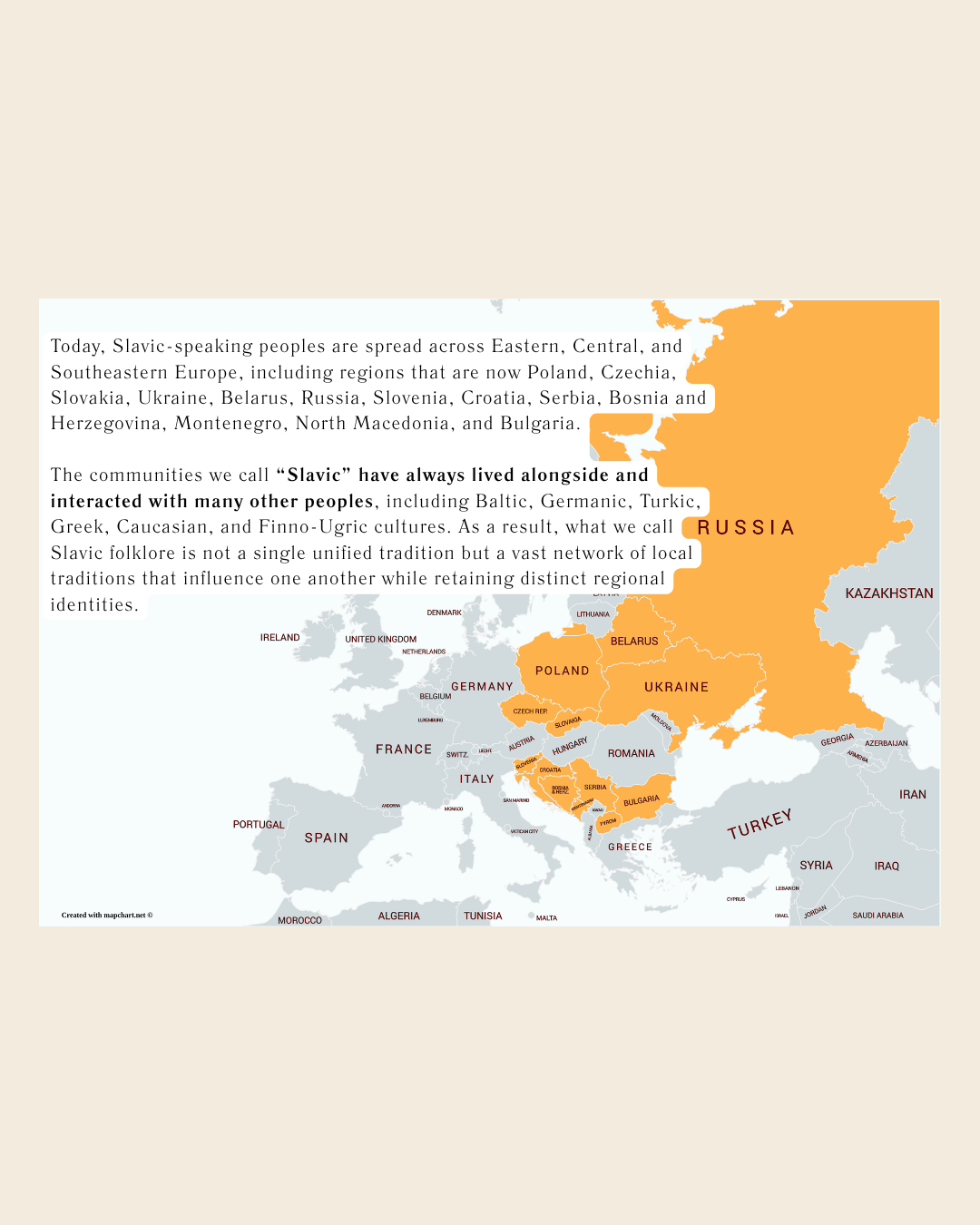
We look at autumn ritual calendars from Poland, Ukraine, Belarus, Russia and Erzya traditions, tracing the movement from harvest completion toward ancestor season, indoor work, social gatherings, courtship and winter—and examining the ways older agricultural practices continued, changed or became intertwined with Christian calendars.
But this isn’t about recreating the lives of the past or romanticizing traditional societies. Traditional people were no more perfectly reciprocal—with nature or with one another—than we are. Ritual becomes interesting precisely because reciprocity does not happen automatically.
Instead, we use these traditions to examine the architecture of our own lives. What sustained you this year? What needs to be used, stored, returned or made into seed for what comes next? What deserves to be brought closer as winter approaches? Who can you actually depend on—and who depends on you?
The central idea of the class is simple:
Ritual turns dependence into a relationship.
What you’ll receive
Full recording of the 2-hour class
Watch at your own pace and return to it throughout the season.
Companion PDF / seasonal planning guide
The complete 31 page presentation with ethnographic material, seasonal calendars, reflection questions and practical exercises.
Practices for working with the Autumn Threshold
Including a harvest inventory built around USE — STORE — RETURN — SEED, mapping the people and relationships you actually depend on, choosing one relationship to strengthen before winter, and creating a Winter Table around what has been received, returned, preserved and shared.
Recording of 2-hour class + companion PDF
Modern life can make the passing of time feel strangely disorienting. One season rolls into another, holidays arrive before we have had time to think about what they mean, and the end of the year can quickly become a rush of obligations, consumption, and trying to fit everything in.
The Calendar Call: Autumn Threshold looks at Eastern European Slavic and Finno-Ugric autumn traditions to ask a different question: what was autumn actually preparing people for?
Historically, winter meant greater vulnerability: cold, darkness, illness, scarcity, isolation. Autumn was therefore not simply a celebration of harvest or an invitation to “slow down.” It was a period of taking stock—of what had been gathered, what needed to be preserved, what had to be returned, and who you would depend on during the season ahead.
Through harvest rituals, offerings, ancestor traditions, communal labor, feasting, courtship, marriage customs and the movement of work from field to household, this class follows two interconnected ideas: reciprocity and belonging. What do we owe to the land, places, people, knowledge and systems that sustain us? And what happens to our relationships with one another when the world outside becomes less abundant and more uncertain?
We look at autumn ritual calendars from Poland, Ukraine, Belarus, Russia and Erzya traditions, tracing the movement from harvest completion toward ancestor season, indoor work, social gatherings, courtship and winter—and examining the ways older agricultural practices continued, changed or became intertwined with Christian calendars.
But this isn’t about recreating the lives of the past or romanticizing traditional societies. Traditional people were no more perfectly reciprocal—with nature or with one another—than we are. Ritual becomes interesting precisely because reciprocity does not happen automatically.
Instead, we use these traditions to examine the architecture of our own lives. What sustained you this year? What needs to be used, stored, returned or made into seed for what comes next? What deserves to be brought closer as winter approaches? Who can you actually depend on—and who depends on you?
The central idea of the class is simple:
Ritual turns dependence into a relationship.
What you’ll receive
Full recording of the 2-hour class
Watch at your own pace and return to it throughout the season.
Companion PDF / seasonal planning guide
The complete 31 page presentation with ethnographic material, seasonal calendars, reflection questions and practical exercises.
Practices for working with the Autumn Threshold
Including a harvest inventory built around USE — STORE — RETURN — SEED, mapping the people and relationships you actually depend on, choosing one relationship to strengthen before winter, and creating a Winter Table around what has been received, returned, preserved and shared.